Friday, 31 December 2010

More Golf


Season's greetings to you, fair reader.

A few weeks ago I started a new contract. While the client site is in the same county as Shoestring Towers, getting there actually involves a 130mile daily round trip. Inevitably there is no sensible train option, and just as inevitably my existing personal transport options (Specialized Sirrus bicycle, a BMW GS motorbike and a 10 year old Golf Cabby) don’t tick the sensible box either. As least, not as far as doing 25,000 miles a year go.

I didn’t have a lot of time, nor much enthusiasm, for the search for commuting wheels, so after trying a couple of alternatives, plumped for a rather obvious answer for a chap looking for practical motoring combined with a decent level of performance; a Golf Gti.

In this case, a 5 year old 3 door, in red. Not only had the first, and only, prior owner kept meticulous service and fuel consumption records, but he’d somewhat pushed the boat out where it came to options, with the result that the list price in 2005 was over £27,000.

Oh, and its an ermmm, ahhrr. Eeeer….. Hum.

Well, ok, its an automatic.

In this case the clever (and heavy) DSG double clutch gearbox. I figured that I needed all the gentle wafting possible after a long day at work – or flogging up to London for meetings.

I’ve had it about 6 weeks now. So far it’s proved a decent place to be for a long commute, the supportive heated leather seats, Xenon lights, good music system and electric doodah’s have helped make the rush-hour drive as painless as possible, and the DSG box is pretty good.

Considering.

But last week I had the opportunity to benchmark the car on a familiar route.

Some observations: first off there’s actually not a massive difference in straight line performance between the Golf and my old 2.7l Cayman. In some flat-out sections the Golf was only 5 mph behind the terminals I’d get with the Porsche, and overtaking required similar gaps. The mid-range turbo boost helped, you’d need a fair few revs up on the Cayman to get the same level of shove.

The ‘Sport’ mode on the Golf's DSG box is very aggressive; it will hold gears until the red line + a bit more even when cruising. which is great for when you’re in maximum attack mode and planning an overtake, or when there’s no other traffic around, but its just too much when any other vehicles are in sight. A buzzing 6000rpm in 2nd in an suburban 40mph limit attracts a fair amount of unwanted attention . In fact, as a transmission map it’d work pretty well on track, but for road use there’s definitely room for an interim ‘Sport’ mode as well as a ‘Race’ one. Oh, and a ‘Snow’ map might help too. Perhaps you could select the modes via a knob on the steering wheel.

Oh wait...

But while similar journey times were achieved, the hours’ drive was simply nothing like as satisfying or as much fun as it was in my old, basic Cayman.

There’s nothing like the information coming through either the Golf's steering or the seat of the pants; by comparison to the Cayman it is numb and withdrawn, beyond a bare minimum of feedback. And of course full torque in the lower gears corrupts your chosen course; you can feel the steering stiffen under the load, and any road bumps produce tugs and thumps through the wheel. And of course the chassis is biased towards understeer, you tend to slither across the road coming out of slow and medium corners, and slither into the fast ones. Its’ ‘safe’ but just doesn’t light my candle.

And while the gearbox behaves itself up to about 60% effort, it stops co-operating after that. But I suppose its not fair to expect the ‘box to know the difference between slowing for bends, slower traffic (with or without an overtaking opportunity), the start of a 30mph zone, or a looming hill. You can use the paddles(small switches behind the spokes at 3 and 6 o'clock in reality), but the gear indicator isn’t big enough. Flip down one gear and you’re not sure if you’ve gone 6-5 or 5-4 for example. Also, a short while after manual intervention the ‘box reverts to its usual full-auto mode. It also thumps a full throttle down change in kick-down.

Even in my advancing years I can still work a gearbox better than Bosch and ZF.

There’s still a proper sports-car shaped hole in the garage, but the Gti will definitely do for now.

SS7

Wednesday, 27 October 2010

Back From the Brink?


A good friend of mine often sings the praises of the decade taste forgot; the 70’s. He reckons the music was brilliant and the parties memorable (if he could remember them).

My impressions are of a dismal decade; constant industrial strife, terrorism, 1973’s oil crisis, 3 day weeks, the threat of nuclear Armageddon and lousy fashions. Most of the music was dire too.

I happened to read a book that brought all back, Michael Edwardes’ 1983 story of how he turned around the failing British car (and truck, tank, tractor, air-conditioning plants etc etc) giant that was British Leyland. Its called, rather ironically, ‘Back from the Brink’.

When Edwardes was appointed Chairman and Chief Executive by Callaghan’s Labour government in 1977, the company had experienced 300 strikes in the 6 months beforehand. He phoned up his opposite number at Ford; they’d also had 300 strikes in 6 months. Leyland lost 250,000 working days in all, a potential revenue of millions.

It was known throughout Europe as ‘The English Disease’. Leyland’s research showed that every time the words ‘Leyland’ and ‘strike’ appeared in the media, more would-be buyers turned away.

The mechanisms of the workforce agitation were interesting. Leyland’s workers were represented by a large number of different unions, all jealously guarding their members jobs and individually negotiated wages and conditions. The resulting demarcation meant it might take 4 different workers to change a simple component on a machine. Most of the strikes were unofficial; they were initiated without the agreement of the union leaders. All it took was the local union officials; conveners or shop stewards, to find some cause for offence and they led their member out. And if those workers were responsible for a key process, it would quickly lead to the shut-down of the plant, or to wider disruption.

Disputes weren’t only related to pay. In fact any attempt by plant management to make changes was met with resistance. In one case the Rover factory was shut down because the management tried to change the workers overalls, in another when a 5 minute discretionary rest break was stopped.

Edwardes was clear where the blame lay for allowing this culture of constant industrial action to reach the stage he faced: for years Leyland’s management had backed down in the face of union threats and industrial action. And the unions knew this, their whole strategy centred on this experience – that eventually the management would back down.

Until the ex-Chloride executive arrived, local factory managers trying to resist absurd union demands would be routinely overruled by senior Leyland directors.

It was no surprise that the result was industrial anarchy; it became accepted practise for workers on night shifts to sleep, agreements negotiated locally meant security staff couldn’t challenge or search workers, so expensive tools and components were taken out through the gates under their noses, workers who sabotaged parts couldn’t be punished, unions controlled the recruitment processes in many plants, and workers would leave shifts hours early having completed negotiated production quotas,

From 1977 on, the Leyland board determined to wrest control of the plants back from militant unions. But turning around a culture that had existed for decades proved to me a hardslog. Even in 1980, on the eve of the make or break launch of the Metro, there were a series of disputes as unions assumed that the management would roll-over to protect the launch schedule from disruption. Edwardes and his board didn’t back down, but they were forced to risk the whole critical product launch to make the point that those days were over.

On a more sinister note, some union officials were left-wing activists, dedicated to bringing about Leyland’s demise. Their thinking was that the business’s collapse, and the resultant unemployment of hundreds of thousands of workers, would ‘prove’ that capitalism had failed and this would be enough to bring about a socialist revolution. On the eve of the secret ballot of all employees on Edwardes’ key 1979-80 rescue plan a meeting was held at Longbridge between union leaders and the committee of the Communist Party of Great Britain, at which they planned their resistance. But the conspirator’s hubris helped bring them down; the misrepresentation of the results (overwhelmingly in favour)by some of the officials finally allowed Leyland to dismiss Derek Robinson, a key militant figure.

The sums of public money Leyland needed for survival were fantastic, even by today’s standards. Their 1980 rescue plan meant going to the government, cap in hand, and demanding for £990 million, at a time when the Mrs Thatcher salary as Prime Minister was £36,000 a year. And Edwardes wasn’t even sure that would be enough.

His strategy for saving Leyland wasn’t only about regaining control of the factories and increasing productivity. He also recognised that earlier product planning decisions were disastrous – models such as the Marina continued to be produced long after they became uncompetitive. He also know that quality of most of Leyland’s product was dismal, and that layers of centralised management structures were preventing effective decisions. In fact before a worker was laid off (in those days the process was called ‘de-manning’), 300 corporate managers lost their jobs.

The fantastic reception the Metro received, and the planned launch of the key mid-market Maestro/Montego in 1983 appeared to give Leyland a future in the automotive industry. Had the Conservative government been less dogmatic about to supporting strategic industries like Leyland in public ownership, like for example the French and Renault, we may have seen a large scale British motor manufacturer survive and flourish into the 21st Century.

As it was, the seeds of disaster were planted by weak, ineffective managers in the 60’s and 70’s and the sorry tale finally ended with the dismal sight in 2005 of suppliers stopping production of MG Rover’s 75, as their invoices hadn’t been paid.

The ‘cool’ 70’s? If you think that you were either not born, or on drugs.

Tuesday, 5 October 2010

Chav Tat Goodwood Breakfast Meet


One of the joys of life down here at the margins of Great Britain is our proximity to Goodwood. Not just for the headline events, like the Revival or the Festivals, but also the other activities run almost every week of the year.

A brilliant innovation that started a few years ago was the monthly Breakfast Club. Usually held on the first Sunday of every month, initially during the summer but now pretty much all year, its an informal gathering of the motoring faithful to sample some of Lord M's organic pork product, enjoy the Sussex fresh air, and get a run out. As it starts early and is wrapped up by late morning, its also an excellent opportunity for the BBT* club to get some 'me' time.

Each Sunday has a theme; sometime a nationality (Japanese cars, French cars), or something more general (Anything but 4 wheels, 80's Icons). Its a risk, there's is little real organisation of attendees (although arrangements are made for some cars) and Goodwood really don't know who its going to turn up at each event. And the weather can be a factor; no garage queen Ferrari will be risked if there's a likelihood of rain!

Any complaints revolve around the price of the food (stop complaining, bring you own sandwiches & remember its free to get in), and the selection of vehicles for the favoured grid and paddock spots can sometime seem perverse'

Yet they've clearly struck a rich seam, most events have a great turnout of top quality vehicles, and the annual 'Supercar Sunday' attracts thousands of breakfasters, rubber neckers and City-bonus purchases each year.

So I was looking forward to last Sunday. The theme was 'Souped Up Sunday' and held the promise of Hot Rods, modded retro stuff, cool Euro-look VWs, and other examples of great quality, home built engineering.

How disappointed was I. Now I'll admit the weather forecast wasn't that encouraging (don't I know it; during Friday's ride home I felt like a 2 wheeled Jacques Cousteau), but there was no excuse for the humdrum, poorly or barely modded, pure factory or sheer crap that was presented last weekend.

An old Honda Civic with an ebay 'coilover' kit and a rattlecan black bonnet doesn't deserve space for its leaking sump on Goodwood's hallowed tarmac.

Its the exception, not the rule, but I suspect its time Goodwood put a little more effort into the running of the Breakfast Events.

SS7
*"Back by Twelve (or else)"

Wednesday, 15 September 2010

I = V/R*


I wonder why General Motor's US version of their electric + range extended car is called the Volt, while GM Europe's version is called the Ampera?

Is it because US citizens don't know what an Ampere is? But I don't really think a high proportion of us Europeans do either, so why not 'Volt' across the globe?

SS7
* Ohm's law

Monday, 23 August 2010

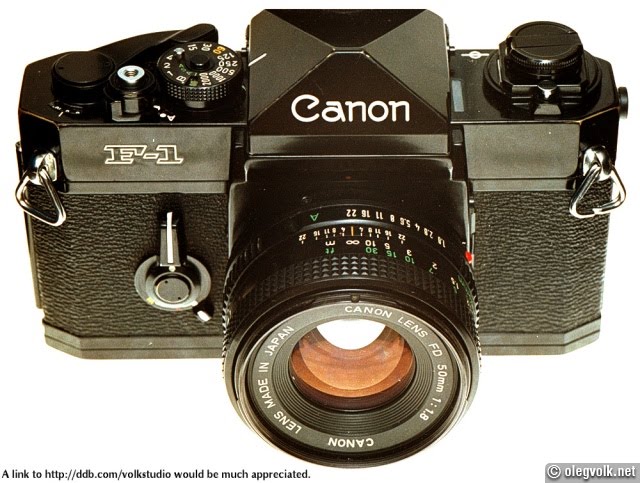
Canon F1


I've been using digital cameras for a few years now. They're so simple to use, and the ability to see the results instantly, and stick them on the PC/web etc. make them perfect for a casual snapper like me. Its no wonder that 35mm camera's are now like LP's; an almost forgotten technology with a dwindling (but vocal) band of users.

However, the other weekend I was at the Vintage at Goodwood festival, and to mark the occasion I dug out my old Canon F1 SLR from the bottom of its particular hiding place. After a bit of searching in my local High Street I even found a roll of 400asa film to use. The old Canon was one of the last all metal camera bodies - the brass is beginning to show through in places, and it weighs a ton (well, 1.45kg with its Tamron zoom lens).

Even the simple act of loading the film gave pleasure, the mechanical feel of the buttons to open the back, the precision of the film speed setting, the lovely 'double-click' as the mirror moved and the shutter worked, the soft click of the aperture ring on the lens, and seeing the settings change through the viewfinder as I decided on shutter and aperture settings. I even got a kick of carrying its reassuring weight around in the crook of my arm - straps are soooooo not on!

In fact, there was as much pleasure in using the machine as in any results I was going to get; it was like a mechanical watch. You just know its not as accurate as the quartz one, yet its somehow so much more satisfying to own.

I must do it more often.

SS7

Thursday, 19 August 2010

TE Lawrence


My middle name is Lawrence*. Perhaps that's why I've always been fascinated by the story of Thomas Edward Lawrence. Born on the wrong side of the blanket, he was neurotic long before it became a recognised state of mind. In his years at Oxford studying classics, he would force himself on long cross country night marches, or fast for days, denying himself even water. In the long holidays he traveled across on foot across France and then the Middle East, studying the Crusader castles . Lawrence also worked on archaeological digs in modern day Iraq, where he learned Arabic dialects, the history and cultures of the region. As a sideline he worked for British Intelligence mapping those areas of semi-desert.

So in many ways his whole life had been to prepare him for his role in the Arabs' revolt against the Ottoman empire, when the red-top press of the day created the 'Lawrence of Arabia' myth.

Lawrence's curse was the realpolitik of the day. He'd been allowed to promise the Arabs a homeland and Arab state in return for their support of Allenby's army. Alas, under French pressure a deal had already done, the allies parcelling up the middle east into various client states.

One of the extraordinary things about stories of Lawrence's life is how the names continue to echo through history: Beirut, Damascus, Iraq, Baghdad and Aquaba.

Lawrence didn't have a good peace. The betrayal of the Arab cause effected him deeply, and he tried lose his hated 'Lawrence of Arabia' identify by re-inlisting in first the Army and then the RAF under pseudonyms. It was under the name 'Shaw' that he published his masterpiece Seven Pillars of Wisdom, which related his story of the Arab revolt.

Lawrence tried to escape his troubles by riding fast bikes, and bought a series of Brough Superiors, the superbike of their day. He would use them for long, fast rides through the night, achieving average speeds that are impressive even by modern standards.

His life ended in May 1935, at the age of 46, when he crashed his bike avoiding a couple of bicycle riding youngsters in a local road. He died of the head injuries suffered in the accident - incidentally one of the surgeons involved in his treatment went on to produce the research that led to the first effective helmets.

Lawrence is buried in a quiet Dorset cemetery on the edge of the small village of Moreton. The other day I was passing on the way home from holiday in the area and visited his grave.

SS7
*Its a family name, no relation

Who uses more than 100bhp?


My old fashioned, aircooled, ditch pump engined BMW GS is the Volvo estate of the bike world. It does about 130mph, and has 6 nicely spread gears. Just occasionally I will use wide open throttle and getting on for peak power revs (around 7000rpm) where the full 100 or so horsepower is available, and I can do that in 2nd, 3rd, and 4th gear without hitting licence-losing speeds.

In car terms this Volvo-bike is not slow - its capable of 0-60mph in around 4 seconds (not with me riding it isn't...) so is quicker than pretty much everything on 4 wheels I'm likely to encounter.

You may be surprised to hear that the latest, baddest, fastest superbike is also made by BMW. The S1000RR produces an astounding 190bhp and does over 180mph. To help prevent it killing riders unused to controlling MotoGP levels of performance, it has a full set of electronic safety aids; including state of the art traction control, selectable power maps and ABS.

But I was thinking about that 190bhp. Typically for a modern superbike, the S1000 is geared for over 100mph at the red-line in 1st gear. To access full power, you will need to have the throttle on the stop, and the engine spinning at 13,000rpm. In rough terms that's going to be in the area of 120mph, 135mph, 150mph, 165mph in 2nd, 3rd 4th and 5th gears.

Even leaving the question of legality, even on the open A roads in my part of West Sussex, its difficult to see those sorts of speeds being a practical proposition, certainly not for the sane or sensible.

I wonder how many of those S1000 riders ever really see the 190bhp they've paid for?